Connect with us

Business

Hari Mishra and Ankit Rajput: From Adversity to Building a Thriving B2B Fashion Business

Published

on

Hari Mishra and Ankit Rajput

In the world of entrepreneurship, resilience often becomes the cornerstone of success. For Hari Mishra and Ankit Rajput, the journey from financial struggle to pioneering a thriving B2B fashion business is a testament to their determination and innovative thinking. The co-founders of Nona Lifestyle, their story is one of transformation, adaptation, and unwavering commitment.

A Rocky Start and the Birth of Nona Lifestyle:

The entrepreneurial journey for Hari and Ankit began with the creation of Poptailor, a custom clothing brand and design studio based in Mumbai in 2016. Despite their passion and efforts, Poptailor’s resources dwindled within a year, leaving the partners in a dire financial situation. Forced to reevaluate their path, they made a pivotal decision to pivot from a B2C model to a B2B approach.

Struggling to make ends meet, Hari and Ankit recognized an unmet need in the market: the challenge that startups, hotels, and corporations faced in sourcing uniforms and clothing for their employees. This realization marked the genesis of Nona Lifestyle, a brand with a mission to bridge this gap in a more organized and efficient manner.

A Determined Pivot to B2B:

To transform their vision into reality, Hari and Ankit knew they needed robust cash flow and investments. With sheer determination, they shifted their focus to a B2B model, borrowing funds to procure raw materials for the new venture. They immersed themselves in textile markets, building relationships with suppliers and tirelessly hunting for customers.

Their tenacity paid off when they secured an order from OYO for 70 t-shirts, a pivotal breakthrough that led to the establishment of theStyleWorx, a brand under Nona Lifestyle. This marked their official entry into the B2B market, offering high-quality workwear and free design support to enhance brand visibility.

Scaling Up and Expanding Horizons:

With their initial success, Hari and Ankit’s brand began to gain traction. Clients like Coca Cola, Zomato, Delhivery, and more recognized the value of theStyleWorx’s offerings. The brand’s commitment to quality and innovation allowed them to carve a niche in the industry.

As their business grew, Hari and Ankit faced the challenge of assembling a talented team despite budget constraints. Undeterred, they assembled a dedicated workforce and transitioned to a co-working space in Janakpuri. Today, their company boasts a full-time team of 40 employees and an additional 50 factory workers.

A Portfolio of Brands and Steady Growth:

Under the umbrella of Nona Lifestyle, Hari and Ankit expanded their offerings, creating two distinct brands: Limone Fresco and Harold Meagan. While Limone Fresco caters to soft furnishing products for various sectors, Harold Meagan focuses on luxury clothing for trend-conscious consumers.

This strategic expansion led Nona Lifestyle to achieve a remarkable turnover of Rs. 20 crore in the fiscal year 2019-20, with a growth rate of 160 percent. Their unwavering commitment to customer needs, an adaptive approach, and a dynamic team have propelled Nona Lifestyle to become a leading supplier of work wear to the hospitality and food delivery industries across five countries.

A Promising Future

As Nona Lifestyle continues to thrive, Hari and Ankit’s dedication remains unwavering. With manufacturing units in Gurugram and Ahmedabad, an inventory-light model, and a customer-centric approach, they are well-equipped to navigate challenges and competition. Their agility, honest pricing, and ability to meet market dynamics have set them apart as industry leaders.

Hari and Ankit’s journey from adversity to success is an inspiring tale of resilience, adaptability, and innovation. As they march forward, Nona Lifestyle’s commitment to delivering quality, value, and customer satisfaction positions them for a future that holds endless possibilities.

Business

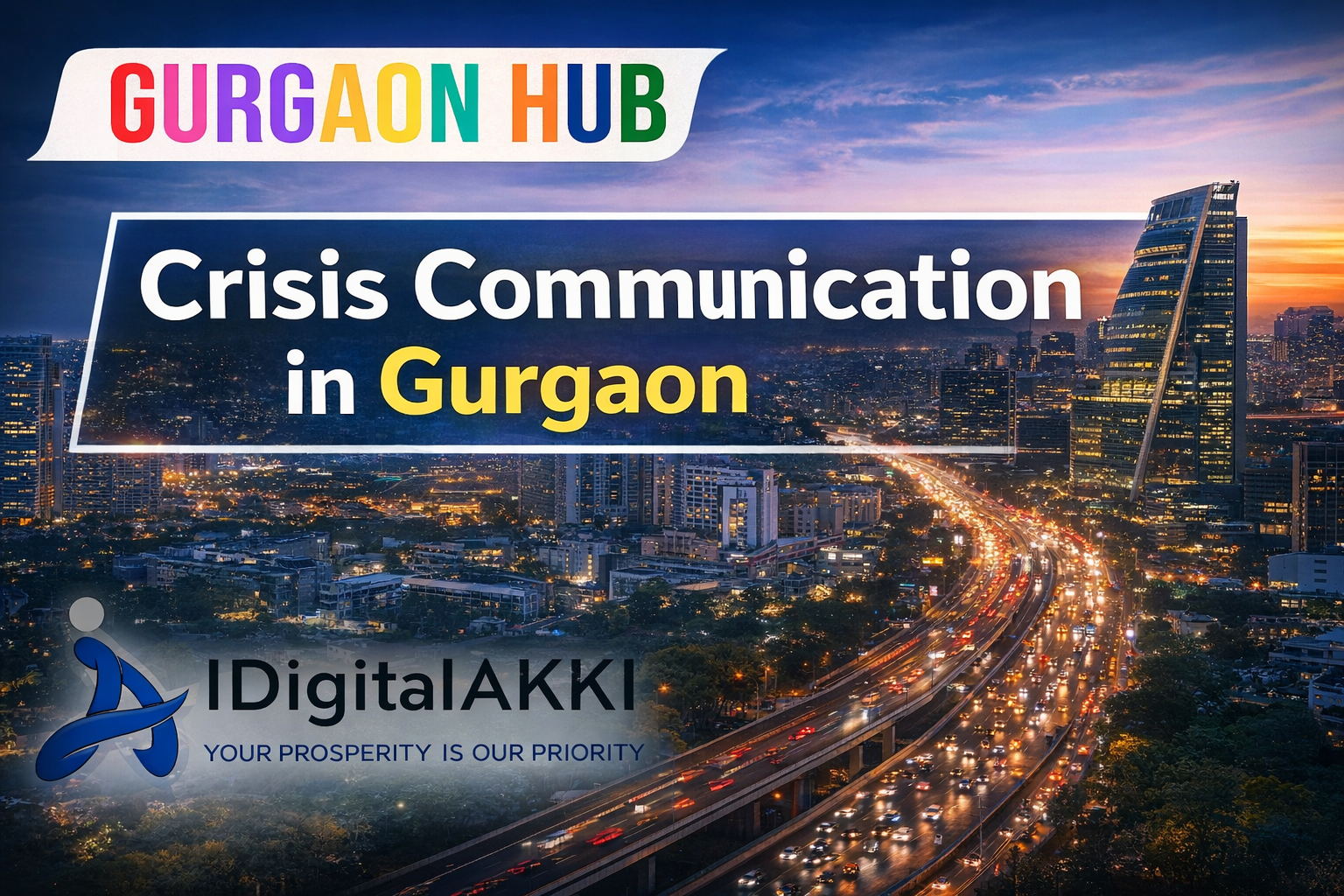
How IDigitalAKKI Media Is Shaping Crisis Communication for Gurgaon-Based Institutions

Published

on

IDigitalAKKi Media Crisis Communication in Gurgaon

Gurgaon’s rapid growth as an educational, corporate, and healthcare hub has brought new opportunities—and new reputational challenges. Institutions operating in the city today face constant digital scrutiny, where public perception can shift quickly due to misinformation, incomplete narratives, or heightened media attention.

In this evolving environment, crisis communication has emerged as a critical function rather than a reactive afterthought. Gurgaon-based digital branding and crisis communication agency IDigitalAKKI Media has been working closely with institutions to address this shift through structured and responsible communication strategies.

The Rising Importance of Crisis Communication in Gurgaon

With the city hosting multinational offices, universities, schools, hospitals, and fast-scaling organizations, even localized incidents can attract widespread attention. Social platforms and search engines often amplify issues faster than official responses can keep pace.

This has created a growing need for agencies that understand not just communication mechanics, but also institutional accountability. Crisis communication today is less about visibility and more about clarity, consistency, and credibility.

A Structured and Disciplined Communication Model

IDigitalAKKI Media approaches crisis management through structured frameworks that prioritize accuracy and long-term reputation over short-term messaging. Rather than relying on reactive publicity, the agency focuses on aligning internal communication with external narratives to reduce confusion and prevent escalation.

This approach helps institutions maintain stability during sensitive periods while ensuring that public communication remains responsible and measured.

Working with Educational and Institutional Stakeholders

Educational institutions in Gurgaon face unique reputational pressures involving students, parents, faculty, and regulatory bodies. Even minor concerns, when miscommunicated, can affect public trust. IDigitalAKKI Media has supported educational and institutional stakeholders by guiding communication during such situations with discretion and strategic oversight.

The agency’s work emphasizes transparency where required, restraint where necessary, and continuity beyond the immediate crisis phase.

Beyond Immediate Crisis Response

Modern crisis communication does not end once attention subsides. Institutions must assess the long-term impact of public narratives and ensure that post-crisis communication reinforces credibility. IDigitalAKKI Media integrates monitoring and advisory support into its crisis strategies, helping organizations regain equilibrium after periods of heightened attention.

This longer-term perspective reflects a maturing understanding of reputation management within Gurgaon’s institutional landscape.

A Gurgaon-Based Agency with Broader Perspective

Operating from Gurgaon, IDigitalAKKI Media is positioned within one of India’s most diverse institutional ecosystems. Its local presence allows the agency to understand regional dynamics, while its broader experience enables it to address communication challenges that extend beyond geographic boundaries.

As searches for crisis communication and reputation management services in Gurgaon continue to rise, agencies with both local insight and structured methodology are becoming increasingly relevant.

A Shift Toward Responsible Reputation Management

The conversation around crisis management in Gurgaon is evolving. Institutions are gradually moving away from reactive damage control toward preparedness, accountability, and long-term trust-building. Crisis communication is now being viewed as part of institutional governance rather than an emergency function.

In this context, agencies like IDigitalAKKI Media reflect a broader shift toward disciplined and ethical communication practices that prioritize credibility over noise.

Continue Reading

Business

Kapil Banwari: Empowering the Next Generation through Financial Literacy with Fyp

Published

on

In the dynamic landscape of finance and technology, Kapil Banwari, a certified Cost and Management Accountant from the Institute of Cost Accountants of India, stands out as a visionary entrepreneur. With a robust background in finance, including seven years at ITC in various financial roles, Kapil recognized the significant gap in financial literacy, particularly among children. In 2021, he took a bold step by founding Fyp, a fintech startup dedicated to empowering children with financial knowledge from an early age.

Kapil’s journey in the corporate world, honing his financial expertise, laid the foundation for his entrepreneurial venture. While at ITC, he observed a notable lack of financial literacy across various age groups. Colleagues from diverse departments sought his advice on personal finance, tax filing, and investment management. This experience illuminated the need for financial education, especially among children.

Transitioning from corporate finance to entrepreneurship, Kapil identified the potential to create a platform that could teach children about finance in an engaging and accessible manner. Leveraging his belief that teaching children is more straightforward than teaching adults, he set out to establish Fyp as a fintech solution tailored for children.

In a crowded space occupied by neobanks like Junio, FamPay, and Walrus, Fyp distinguishes itself by prioritizing financial literacy. Fyp’s core objective goes beyond facilitating payments; it aims to educate children about financial concepts through gamification and bite-sized video content. Understanding the immense growth potential in the global neobank market, Fyp is strategically positioned to cater to India’s young population, where more than half is under the age of 18.

Fyp’s uniqueness lies in its acquisition of Edunify, an edtech startup, earlier this year. This strategic move enhances Fyp’s capability to expand its user base through collaborations with schools nationwide. By integrating financial literacy into its offerings, Fyp envisions becoming a trusted banking partner for pre-teens and teenagers, offering convenience in banking services.

Fyp operates as a neobank, partnering with YES Bank for wallet services and Visa for its online and physical cards. Its revenue model primarily relies on interchange fees levied by banks on merchants for payment processing. The startup also issues physical cards linked to Fyp accounts, catering to users interested in both virtual and physical transactions. Additionally, Fyp explores revenue streams by associating with children-centric brands, providing a platform for marketing on its app.

Since launching its Minimum Viable Product (MVP) in September 2021 and the main product in December, Fyp has witnessed remarkable traction. With over eight lakh downloads across Android and iOS, the startup boasts daily active users ranging from 40,000 to 45,000. Having processed more than 2.5 lakh transactions, Fyp has positioned itself as a significant player in the teen-focused neobanking space.

Kapil’s leadership at Fyp reflects his commitment to bridging the financial literacy gap for the next generation. The startup’s target audience, aged between 11 and 21 years, resonates with the broader trend in teen-focused neobanking. Impressively, 70 to 75 percent of user acquisition for Fyp has occurred organically, underlining the relevance and appeal of its offerings.

In early 2022, Fyp successfully secured a seed round of $2 million, signaling investor confidence in its vision and potential. Currently in the process of raising its next investment round, Fyp continues its mission to empower children with financial knowledge and redefine their banking experiences.

As Kapil Banwari leads Fyp into the future, the startup stands as a beacon for financial inclusion and education. By fostering a generation of financially literate individuals, Fyp contributes to building a more empowered and economically savvy society.

Continue Reading

Business

Revolutionizing Fleet Management: The Visionaries Behind LocoNav

Published

on

In the vast expanse of developing countries across Asia, Africa, the Middle East, and Latin America, a significant challenge plagues the on-road commercial vehicle industry. With more than 250 million vehicles navigating these regions, the lack of access to modern technology hinders operational efficiency for fleet owners. Recognizing this gap, LocoNav, a full-stack fleet management start-up, emerges as a game-changer, employing IoT innovations to streamline operations and enhance efficiency.

Shridhar Gupta and Vidit Jain, the co-founders of LocoNav, embarked on this journey in 2016 with a mission to empower fleet owners in price-sensitive markets. They aimed to deliver B2B fleet management solutions that cater to diverse technological landscapes, ensuring accessibility and affordability for all stakeholders.

Shridhar Gupta, with a background in leading sales and partnerships at ClearTax, brought a wealth of experience to LocoNav. His earlier roles in companies like Fitho and DNG Enterprises showcased his commitment to building scalable solutions. Shridhar’s visionary leadership is integral to LocoNav’s success, driving innovation and strategic growth. Vidit Jain, a founding engineer at Bizzy, played a crucial role in shaping the backend framework for the omnichannel marketing engine. His experience at ClearTax and expertise in technology positioned him as a key force behind LocoNav’s technical prowess. Vidit’s commitment to creating accessible and global solutions aligns seamlessly with the startup’s goals.

LocoNav, headquartered in San Francisco and Gurugram, specializes in providing comprehensive fleet management solutions since its inception. The start-up addresses the needs of various on-road vehicles, including cars, bikes, buses, trucks, ambulances, and construction vehicles. By integrating IoT sensors into vehicles, LocoNav collects and transfers data to secure cloud servers, leveraging advanced AI and ML for actionable insights.

The key features of LocoNav’s fleet management solution focus on tracking, measuring, and optimizing the entire fleet. These features include vehicle tracking, trip management, fuel monitoring, safety measures, compliance solutions, and more. LocoNav stands out by offering real-time alerts, rich analytics, and customized reports in an interface accessible in over 14 languages.

Vidit emphasizes LocoNav’s distinction as the largest fleet tech company in India, catering to the specific needs of developing and emerging markets. The start-up’s platform is designed with a customer-centric approach, solving industry challenges instead of imposing generic solutions. The user-friendly interface, available in multiple languages, ensures accessibility for diverse fleet owners, making LocoNav the go-to choice in the industry.

LocoNav’s success is further underscored by its global presence, extending to over 50 countries. With a track record of serving more than five million vehicles and boasting over 90,000 customers worldwide, LocoNav’s impact on the fleet tech industry is substantial. Despite challenges, LocoNav has witnessed a robust growth trajectory and achieved EBITDA positivity even during the pandemic. The start-up’s commitment to innovation and addressing industry concerns has resonated with investors. In a Series B funding round in June 2021, LocoNav secured $37 million from notable investors, including Quiet Capital, Anthemis Group, Sequoia Capital India, and others.

As a SaaS startup, LocoNav’s monetization strategy revolves around subscription-based solutions, combining software with connected devices. The platform’s reach is amplified through strategic partnerships that contribute to the growth of the LocoNav ecosystem.

Shridhar Gupta and Vidit Jain envision LocoNav as a catalyst for transforming fleet management globally. Their commitment to providing accessible, scalable, and innovative solutions remains unwavering. LocoNav’s journey, marked by continuous innovation and strategic expansion, exemplifies the impact visionary leaders can have on an industry.

In conclusion, Shridhar Gupta and Vidit Jain’s leadership at LocoNav reflects a paradigm shift in how fleet management solutions are conceived and implemented. Their visionary approach and dedication to creating a global impact through technology-driven solutions position LocoNav as a frontrunner in the ever-evolving fleet tech landscape.

Continue Reading

Trending